What the Inspector Sees That Your Contractor Hoped You Wouldn't Ask About
Passing a pool inspection feels like a finish line. The inspector signs off, the water goes in, and you're done worrying about code compliance. Except that's not quite how it works.
Municipal inspections in Richmond and the surrounding jurisdictions are a checkpoint, not a guarantee. They verify that specific elements meet minimum code requirements at a specific moment in time. What they don't do—and can't do—is evaluate the quality of workmanship, the longevity of materials, or the dozen small decisions a contractor made when nobody official was watching.
Understanding what inspectors actually look for, and what falls outside their scope, is one of the most useful things a Richmond pool buyer can know.
How the Richmond Inspection Process Actually Works
Pool construction in Richmond typically involves multiple inspections at different stages, not a single final walkthrough. Depending on your jurisdiction—the City of Richmond, Henrico County, Chesterfield County, or another locality—the specific requirements vary, but the general structure is similar.
A pre-pour inspection happens before concrete or gunite is applied to the steel rebar framework. The inspector verifies that the rebar is correctly placed, the bonding wire is properly installed, and the shell configuration matches the permitted plans. This is arguably the most important inspection in the entire process, because once concrete goes over that steel, nobody can see it again.
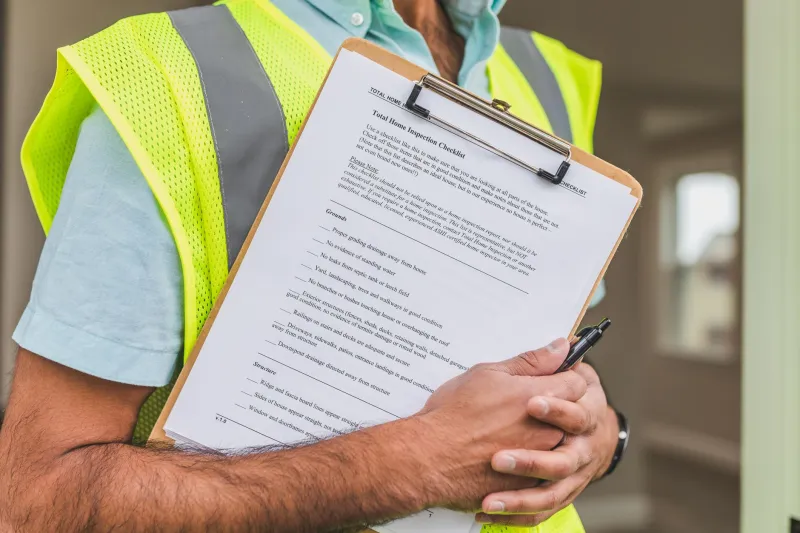
Subsequent inspections typically cover plumbing rough-in, electrical work, and final completion. The final inspection checks safety requirements: fencing and barrier compliance, drain covers (a major safety focus since the Virginia Graeme Baker Pool and Spa Safety Act), bonding continuity, and equipment installation.
Each of these inspections is scheduled, which means contractors know exactly when an inspector is coming. That's worth sitting with for a moment.
The Scheduled Inspection Problem
When an inspection is scheduled in advance, experienced contractors know precisely what the inspector will look at and when. That creates an obvious incentive structure: make sure the inspected elements are correct at inspection time, and manage everything else as a separate matter.
This isn't necessarily nefarious—most contractors want to pass inspections and most inspectors are thorough professionals. But it does mean that the inspection process is less of an independent audit than it might appear. A contractor who knows an inspector focuses heavily on bonding continuity might ensure that's impeccable while being less careful about something that rarely gets scrutinized, like the compaction of backfill around the pool shell.
Poor backfill compaction, incidentally, is one of the more common hidden problems Richmond contractors encounter when doing repair work on pools built by less careful companies. It doesn't show up in an inspection. It shows up years later as deck cracking, settling, or in serious cases, structural movement around the pool shell.
Common Code Violations That Do Get Caught
Inspectors in Richmond-area jurisdictions catch real problems regularly, and it's worth knowing what those tend to be.
Barrier and fencing deficiencies are the most frequently cited issues. Virginia code requires pool barriers to meet specific height and gap requirements, with self-closing, self-latching gates. Contractors sometimes install fencing that's close but not quite compliant—latch mechanisms that don't meet the required release height, gaps under fencing that exceed the allowed dimension, or gate swings that open inward rather than outward.
Drain cover compliance is another common catch. Anti-entrapment drain covers are required by federal law, and they have to be properly sized and installed for the specific drain opening. Covers that are the wrong size or improperly secured get flagged.
Electrical bonding issues come up more than homeowners would expect. Pool bonding—connecting metal components to a common equipotential grid to prevent electric shock—is complex and easy to get partially wrong. Missed connections, improper wire gauge, or incomplete grids are real findings.
Setback violations occasionally make it to inspection because someone miscalculated. Pools need to maintain minimum distances from property lines, easements, and structures, and those measurements sometimes get optimistic during the excitement of the design phase.
What Inspectors Typically Don't Evaluate
This is the part that matters most for homeowners who assume a passed inspection equals a quality build.
Inspectors generally aren't assessing the quality of the gunite or plaster application—whether it was applied at the right thickness, whether the mix was properly hydrated, whether it cured correctly. They're verifying structural dimensions and rebar placement before the pour, not the quality of the material itself.
They're not evaluating equipment quality or brand choices. A pump that technically meets code minimums might be the cheapest unit on the market with a two-year lifespan. That's not an inspection concern—it's a contractor integrity concern.
They're not reviewing the quality of the tile work, the finish of the coping, the adequacy of the drainage design, or whether the equipment was installed in a way that will make future maintenance practical. All of that lives outside the inspection scope.
How to Use the Inspection Process to Your Advantage
The smartest Richmond homeowners don't just wait for inspectors to do their jobs—they treat inspections as touchpoints in their own oversight process.
Ask your contractor for the inspection schedule before construction begins. Show up for the pre-pour inspection if you can. You don't need to understand everything the inspector is checking—just being present signals to your contractor that you're engaged, and you can ask the inspector directly if there's anything they found worth noting.
If your contractor is resistant to you being present during inspections, that's useful information.
Consider hiring an independent third-party inspector—someone with pool construction expertise but no financial relationship with your contractor—to review the work at key stages. This is common in custom home construction and makes just as much sense for a $70,000 pool. The cost is modest relative to the total project, and the peace of mind is real.
The Difference Between Passing and Lasting
There are Richmond pool builders who build to pass inspections. And there are builders who build so that the pool is still performing well in twenty years. Those aren't always the same contractors.
The inspection process is a floor, not a ceiling. It establishes minimum acceptable standards and catches the most obvious problems. Everything above that floor—the quality of materials, the care of installation, the honesty of the contractor when something goes wrong during construction—depends entirely on who you hired.
Knowing what inspectors look for helps you understand where the safety net is. Knowing where the safety net ends is how you decide how carefully to vet the person building your pool.