Trying to Help and Making It Worse: What Richmond Homeowners Do Before the Crew Shows Up
There's a particular kind of frustration that pool builders in the Richmond area know all too well. They pull up to a job site, ready to break ground, and something stops them cold — not a permit issue, not a weather delay, but something the homeowner did over the weekend trying to be helpful.
"I get it," says one Richmond-area contractor who's been building pools for over fifteen years. "People are excited. They want to contribute. But some of the prep work homeowners take on themselves ends up costing them more than if they'd just left the yard alone."
This isn't about blaming anyone. Most homeowners have no idea where the line is between "helpful prep" and "expensive interference." So we talked to several local Richmond builders about the most common — and most costly — pre-construction mistakes they've encountered on the job.
Moving Dirt Without a Plan
Grading is one of the biggest culprits. A homeowner hears the word "level" and thinks, okay, I'll rent a skid steer and flatten things out a bit. The problem is that pool construction requires very specific grading — not just for the pool itself, but for drainage, water runoff, and how the surrounding patio will sit.
One builder described arriving at a Richmond property where the homeowner had regraded about 2,000 square feet of backyard over a long weekend. The slope looked flatter to the naked eye, but it had actually redirected drainage toward the house foundation. The pool crew had to bring in a separate grading contractor before they could start, adding nearly $1,800 and five days to the project.
"We have a specific grading plan that's part of the engineering," the builder explained. "When someone changes the lay of the land before we get there, we're essentially starting from scratch on that piece of it."
What to do instead: If your yard has obvious drainage problems, flag them for your builder during the planning phase. Let the grading be part of the professional scope of work. Don't touch it.
The Utility Line Guessing Game
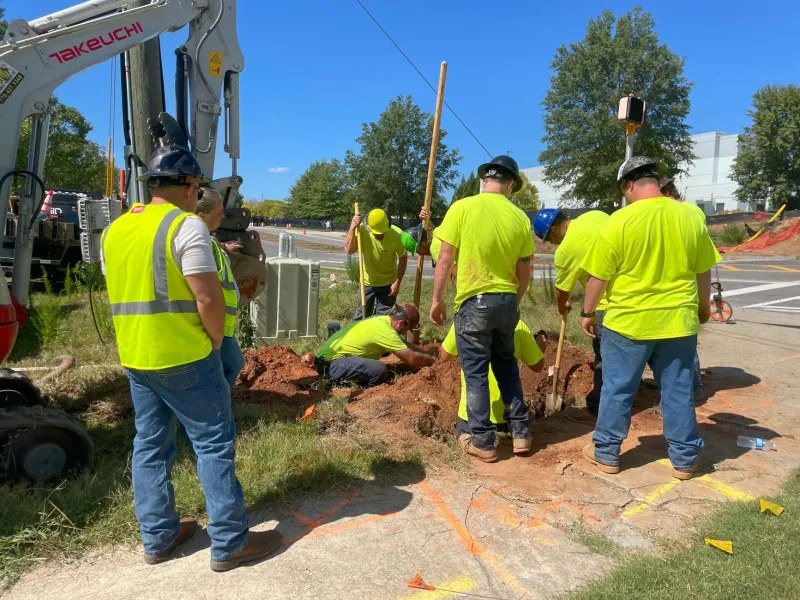
Virginia 811 — the state's call-before-you-dig service — exists for a reason. Utility lines get marked by the service providers, and then professional excavators know exactly where not to dig. But that process has a specific window, and homeowners sometimes assume their own digging projects (removing a garden bed, pulling out a fence post, trenching for a sprinkler line) are too small to matter.
They're not.
"We had a homeowner in Henrico who dug up a section of their yard to remove an old raised garden bed," recalled another local contractor. "In doing so, they nicked an irrigation line and — worse — partially exposed what turned out to be a low-voltage electrical conduit for outdoor lighting. Now we had an unknown electrical situation that required an electrician to assess before we could proceed. That was a two-day delay minimum."
Beyond irrigation and lighting, Richmond properties in older neighborhoods can have buried infrastructure that isn't always on official maps — old fuel lines, abandoned water lines, even buried septic components on properties that long ago switched to city sewer.
What to do instead: Do not dig anything in your backyard once you've signed a contract. Not a flower bed, not a fence post. Let your pool builder coordinate all site prep that involves breaking ground, even if it seems unrelated to the pool footprint.
Removing Structures the Wrong Way
Some homeowners want to save money by demolishing existing structures themselves — old sheds, above-ground pools, decks, pergolas. In theory, this makes sense. In practice, it often creates problems.
The issue isn't always the demolition itself. It's what gets left behind. Concrete footings from an old deck. Buried treated lumber from a shed floor. The base of a fence post that snaps off below grade. These hidden remnants can interfere with excavation equipment, create voids in the soil, or introduce materials that complicate the compaction process.
One Chesterfield County builder told us about a homeowner who removed an above-ground pool on their own — great initiative — but didn't account for the concrete blocks that had served as the base ring supports. Several were buried a few inches below the soil surface. The excavator hit three of them during digging, which dulled equipment and required hand-removal before work could continue.
"It wasn't a disaster, but it cost us half a day," the builder said. "And that's time the homeowner paid for."
What to do instead: Talk to your pool builder before removing any existing structure. Ask what they need cleared versus what they'd prefer to handle themselves. Some builders actually include demo in their scope and would rather do it their way.
Planting, Mulching, and Other "Final Touches" That Aren't Final
This one sounds almost too simple to mention, but it comes up more than you'd expect. Homeowners who are excited about the finished product sometimes start landscaping the surrounding area before construction even begins. New sod, fresh mulch, newly planted shrubs — all of it positioned right where heavy equipment needs to travel.
Pool construction is not a clean process. Crews need access paths, staging areas for materials, and room to maneuver excavation equipment. None of that is gentle on newly planted landscaping.
"We had a homeowner plant six arborvitaes along the fence line — right where we needed to run the equipment to reach the backyard," one builder recalled with a tired laugh. "They'd spent maybe $400 on those plants. We had to carefully remove them, stage them in the side yard, and replant them after. It added time and created some stress for everyone."
What to do instead: Hold off on any landscaping investments until after construction wraps up. Your builder should give you a clear picture of the access path and staging areas. Keep those zones completely clear.
What You Actually Can Do Before the Crew Arrives
So if digging, grading, demolishing, and landscaping are all off the table — what can homeowners actually do?
Quite a bit, it turns out.
- Clear the interior of any outdoor structures that will stay on the property — patio furniture, grills, potted plants, kids' toys, garden tools.
- Communicate with your neighbors about upcoming noise and equipment access, especially if the crew will need to use a side gate or easement.
- Document your yard's current condition with photos and video, so there's a clear record of what existed before construction started.
- Confirm HOA approvals and permits are fully in place — your builder should handle the permit itself, but if your neighborhood has an HOA, make sure all approvals are documented in writing.
- Ask your builder for a staging plan so you understand exactly what areas of your yard will be affected and when.
The best thing a Richmond homeowner can do before construction starts is ask questions — not grab a shovel. Your builder has seen every kind of backyard this area throws at them, from the clay-heavy soil in Midlothian to the older lots in the Fan with surprises buried decades deep. Trust that expertise, and save your energy for the part that's actually fun: picking out the finishes.