Why Richmond Pool Projects Go Off the Rails: The Hidden Site Problems Nobody Talks About at the Sales Meeting
Your neighbor's pool was supposed to take twelve weeks. It took eight months. The budget went from $65,000 to somewhere nobody wants to say out loud. And the whole time, they kept getting told it was "almost resolved."
If that story sounds familiar, you've witnessed what Richmond pool contractors quietly call the real project — the one that happens underneath the one you signed up for.
Richmond is a beautiful, historically layered city with a landscape full of character. It's also a city where backyards can be genuinely treacherous for pool construction. Understanding why can save you from walking into the same trap your neighbor did.
The Soil Situation Nobody Puts in the Brochure
The Richmond metro area sits on a complex mix of geological zones. The Piedmont and Coastal Plain meet here, and that transition creates soil conditions that vary dramatically from one street to the next. In some areas, you're digging through relatively stable ground. In others, you hit expansive clay that swells when wet and contracts when dry — a nightmare for pool shells, which depend on stable, consistent support.
Local contractors have learned to expect surprises. One builder who works heavily in the West End described finding soil conditions on adjacent lots that were completely different from each other. "We test before we commit to anything now," he said. "But a lot of builders still don't do geotechnical assessments upfront, and that's where you get the phone calls six weeks in."
If your contractor hasn't mentioned soil testing during the planning phase, ask about it directly. A simple assessment can reveal whether your site needs additional excavation, imported fill material, or a different foundation approach — all of which affect both cost and timeline.
Buried Utilities: Richmond's Underground Gamble
Older Richmond neighborhoods — Northside, Church Hill, parts of the Fan District's surrounding areas — have underground infrastructure that doesn't always appear on official maps. Utility lines, old drainage systems, and in some cases, remnants of previous structures can sit undiscovered until a crew starts digging.
This isn't just a nuisance. Hitting an unmarked gas line or severing an old sewer lateral can halt a project for weeks while the appropriate agencies and specialists get involved. It creates liability questions, permit complications, and the kind of delays that feel entirely out of everyone's control — because they largely are.
The best defense is to call 811 (Virginia's "Call Before You Dig" service) well before any work begins, and to hire a contractor who also requests historical utility records from the city. It's an extra step. It's absolutely worth it.
The Scheduling Reality of a Busy Market
Richmond's pool construction market has been running hot for several years. That's good news for homeowners who want options — and tricky news for anyone who assumed their project would move at a steady pace.
Subcontractors — electricians, plumbers, concrete specialists — are often juggling multiple projects simultaneously. When one job runs long (see: soil complications, utility surprises), the ripple effect hits every project behind it on the schedule. Your pool might be on hold not because of anything happening in your backyard, but because the tile crew is still finishing up a job across town.
Experienced general contractors build buffer time into their schedules and maintain relationships with multiple subcontractor teams for exactly this reason. Ask any builder you're considering: "What's your backup plan if your primary subcontractors get delayed on another job?" The answer will tell you a lot about how they manage real-world complexity.
A Practical Pre-Project Checklist for Richmond Homeowners
Before you finalize any contract, walk through your own backyard with these questions in mind:
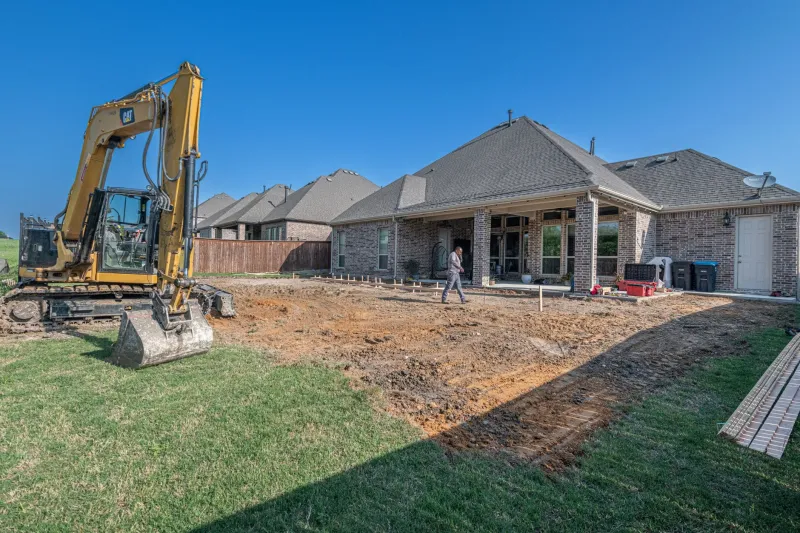
Access: Can excavation equipment actually get into your yard? Narrow side gates, low-hanging trees, or fences that would need to be removed can add days to the start of your project.
Drainage: Where does water go when it rains? If your yard pools near the proposed build site, that's a conversation to have before anyone starts digging.
Existing structures: Do you know what's under your lawn? Old patios, buried irrigation lines, and even tree root systems from removed trees can complicate excavation.
Slope: A sloped yard isn't disqualifying, but it does change the engineering requirements. Ask specifically how your contractor plans to address grading and retaining.
Neighbor proximity: In tighter Richmond neighborhoods, your pool's proximity to the property line affects permitting, construction logistics, and sometimes requires additional structural considerations.
What the Good Builders Do Differently
The contractors who consistently bring projects in on time and close to budget aren't necessarily faster or cheaper than their competitors. They're just more honest about what they don't know yet.
They build contingency budgets into proposals. They schedule soil assessments before finalizing designs. They communicate proactively when something unexpected comes up rather than hoping it resolves itself before you notice.
That kind of transparency isn't always the most exciting sales pitch. But in a city with as much underground complexity as Richmond, it's the approach that actually gets pools finished.